
If you have heard that solar panels for homes and businesses can bring down your electricity bill but are not entirely sure how that actually works, you are not alone. The basic idea is straightforward: panels generate electricity from sunlight, and you use that instead of buying from the grid. But understanding how solar panels reduce electricity bills depends on a few things: how much the system generates, how much of that generation you use at home or at work, and what your electricity tariff rate is.
Understanding how these pieces fit together is the difference between choosing a solar system that genuinely reduces your costs and one that looks good on paper but delivers less than expected in practice.
How solar panels turn sunlight into electricity
Solar panels are made up of silicon cells that convert light, specifically photons from sunlight, into direct current (DC) electricity. This DC electricity flows to an inverter, which converts it into alternating current (AC). AC is the form of electricity used by your household appliances, office equipment, and the grid.
The amount of electricity generated depends on the panel’s rated wattage, how many hours of effective sunlight it receives, and environmental factors like temperature and shade. In Ahmedabad, the average peak sun hours are around 5 to 5.5 hours per day on an annual basis, one of the better figures in India. A 1 kW solar system in Ahmedabad generates approximately 4.5 to 5.5 units (kWh) of electricity per day. A 3 kW system generates roughly 400 to 500 units per month.
Why electricity bills have been going up
India’s electricity tariffs have increased consistently across states, driven by rising fuel costs for thermal power generation, infrastructure spending on the distribution network, and periodic regulatory adjustments. In Gujarat, the GERC revises tariffs regularly, and the trend over the past decade has been upward across all consumer categories, domestic, commercial, and industrial alike. Historical data suggests tariffs in India have been increasing at 3 to 5 percent per year on average.
For households, this means the bill grows even when consumption stays the same. For commercial and industrial consumers, who are on higher tariff slabs to begin with, the impact is even more direct. A business spending Rs. 10 per unit today could easily be paying Rs. 14 to Rs. 15 per unit within a decade if this trend continues. This is precisely why more consumers are turning to solar power to reduce electricity cost over the long term.
How solar reduces what you pay each month
The saving works because every unit your solar system generates during the day is a unit you do not need to buy from the grid. If your home or business uses 20 units during daylight hours and the solar system generates 15, only 5 units need to come from the grid in that period. Those 15 solar units do not appear on your bill as consumption.
The solar energy cost savings depend on the gap between what you pay per unit from the grid and the effective cost of generating electricity from solar. For most households in Gujarat, paying between Rs. 5 and Rs. 8 per unit, and with a solar system for reducing power bills generating at effectively zero running cost, the savings per unit used are straightforward. A 3 kW system generating 400 units per month saves a household paying Rs. 6 per unit around Rs. 2,400 per month.
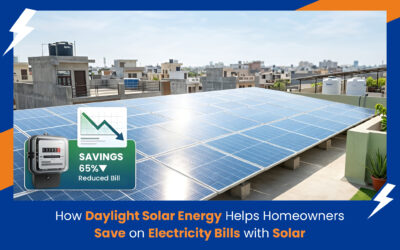
Read More: How Daylight Solar Energy helps homeowners save on electricity bills with solar
How net metering works and why it helps
Net metering is the billing arrangement that makes rooftop solar panels for bill reduction significantly more valuable. Your local DISCOM installs a two-way meter that measures both what you consume from the grid and what your solar system exports to it. During the day, when your panels generate more than you are using, the surplus flows to the grid, and the DISCOM credits your account for those units. At the end of the billing cycle, your bill reflects only the net difference.
This means a household or business that generates surplus power during the day can offset the grid electricity used in the evenings. In strong generation months, bills can drop to very low amounts or near zero. The net metering connection is set up by Daylight Solar as part of every installation, and coordinating with the DISCOM to get the bi-directional meter installed correctly is handled directly.
What the savings actually look like
For a household in Ahmedabad using around 350 units per month with a current bill of Rs. 3,500, a 3 kW rooftop solar system installed at an effective cost of about Rs. 1.6 lakh after subsidy generates approximately 400 to 430 units per month. With net metering, the monthly bill typically drops to Rs. 300 to Rs. 800. Annual savings work out to Rs. 30,000 to Rs. 35,000.
The system pays for itself in about 4.5 to 5 years. After that, the generation is effectively free for the remaining 20 years of the system’s life. The solar rooftop system benefits extend well beyond the payback period at today’s tariff rates alone; the total savings over 25 years are in the range of Rs. 7.5 lakh to Rs. 8.75 lakh. When the expected tariff increases are factored in, the lifetime savings figure is considerably higher.
For businesses, the math is even more compelling
The solar energy financial benefits are especially pronounced for commercial and industrial users. Commercial and residential solar savings follow different scales, but both are significant. Commercial and industrial electricity tariffs in Gujarat typically run between Rs. 7 and Rs. 10 per unit. Every unit generated by a rooftop solar system displaces grid import at those rates. A factory running a 200 kW system that generates approximately 8 lakh units per year saves around Rs. 56 lakh to Rs. 80 lakh annually at those tariff rates. At that rate of saving, a system costing Rs. 1 crore to Rs. 1.2 crore pays for itself in under two years in some cases.
Industrial businesses can also claim 40 percent accelerated depreciation on solar equipment in the first year under Section 32 of the Income Tax Act. For profitable businesses with a tax liability, this further reduces the effective cost of installation and shortens the payback period. It is one of the clearest examples of solar electricity savings for businesses going beyond just the monthly bill.
Why the design of the system matters for your savings
A solar system’s ability to deliver solar panels for energy cost reduction is not just determined by the panel’s rated wattage. It depends on how well the system is matched to when and how much electricity you actually use. Daylight Solar Energy starts every installation with a review of 12 months of electricity bills to understand your usage pattern.
A home that uses most of its electricity in the evenings, for fans, televisions, and lights, needs a different system design than one where daytime air conditioning and appliances dominate. Getting this right means the solar generation aligns with consumption as closely as possible, reducing grid import and maximising the value of every unit the system produces. Understanding how solar power lowers electricity bills in practice comes down to this alignment between generation and usage.
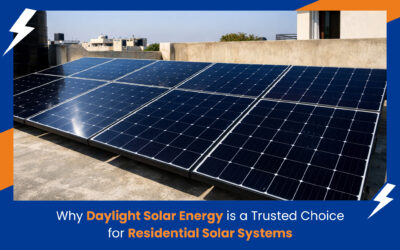
Read More: Why Daylight Solar Energy is a Trusted Choice for Residential Solar Systems
What to check before installing
The condition and orientation of your roof affect how much the system can generate. South-facing roofs in India get the best annual exposure. East and west orientations can still work well, depending on your usage pattern through the day. Shading from water tanks, trees, or nearby buildings should be assessed carefully; even partial shade on one panel can affect the output of the whole string.
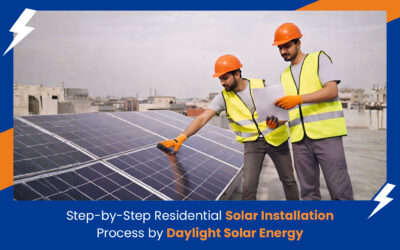
A proper site assessment before installation ensures the system is designed for your specific situation, not a generic template. As a trusted solar panel company in Ahmedabad, Daylight Solar carries out this assessment as the first step of every project, and the proposal that follows shows you exactly what to expect in generation, in savings, and in payback period before you commit to anything.




0 Comments