
When you put money into a rooftop solar system, you are expecting it to work well for the next 25 years. That is not an unreasonable expectation. Modern solar panels are genuinely built to last that long. But lasting 25 years and performing well for 25 years are two different things. A panel that degrades faster than it should, or a system that develops faults because of a poor installation, quietly costs you money without being obvious about it. This is where solar power system longevity becomes more than just a promise on paper.
Long-lasting solar panels are not just a matter of picking a good brand. They are the result of a well-thought-out design, the right components for the local climate, a clean installation, and routine maintenance. Daylight Solar Energy approaches every residential rooftop installation in Ahmedabad and Gujarat with the full 25 years in mind from the beginning, building long life solar power systems that actually hold up over time.
Why the quality of the installation matters more than people expect
There is a real gap in the market between what solar panels can do and what a poorly executed installation actually delivers. Research published in the journal Energies found that solar panel degradation rates vary significantly depending on the manufacturer and how the system was installed. Most modern panels from established brands degrade at 0.5 to 0.8 percent per year. Premium panels from reliable manufacturers degrade as slowly as 0.3 percent per year, meaning they still produce around 93 percent of their original output after 25 years. Lower-quality panels can fall to 70 percent or below over the same period. That gap directly impacts solar panel lifespan for homes.
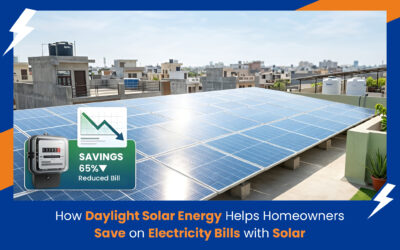
That difference might sound small in percentage terms, but in rupee terms it is not. A 5 kW system running at 93 percent of its original output in year 25 generates considerably more total electricity over its lifetime than one running at 70 percent. For a household saving Rs. 3,000 per month, even a 10 percent output gap compounds into thousands of rupees in lost savings per year in the later stages of the system’s life.
How Daylight Solar selects its components
Daylight Solar sources panels that come with manufacturer guarantees of at least 80 percent output after 25 years, with the degradation curve set out in writing. The panels are chosen specifically for Gujarat’s climate, particularly the high temperatures in summer, which affect both how quickly panels degrade and how efficiently they generate electricity on a daily basis. This is where high efficiency solar panels for homes make a measurable difference.
The inverters are from brands with active service networks in India. An inverter from a manufacturer with no local support is a problem when it needs replacing three years after installation. Daylight Solar thinks about this during equipment selection, not after the fact, ensuring reliable solar panel systems from day one.
Starting with a proper site assessment
A long-lasting installation starts before anything goes up on the roof. Daylight Solar evaluates the roof’s structural condition before designing any system. If a roof is likely to need repairs or replacement in five years, that needs to be sorted first because removing and reinstalling a solar array is expensive and disruptive. Any structural concerns are flagged to the homeowner early, so the roof is ready to carry the system for its full intended life. This approach supports truly durable solar panel systems for homes.
The system design also accounts for shading. Shade from a water tank, a nearby building, or a tree that grows significantly over the next decade can meaningfully reduce output. Daylight Solar uses shadow analysis during the design phase to position panels where they get consistent, unobstructed sun through the year, accounting for how the sun’s angle changes with the seasons.
Getting the mounting structure right
The mounting frame is one of the most overlooked parts of a home solar installation. It holds the panels in place against wind, rain, and years of thermal expansion and contraction. Daylight Solar uses hot-dip galvanized or anodized aluminum frames suited to the specific roof type and local wind conditions. For the flat rooftops common across Ahmedabad, tilted frames are designed to optimise annual generation while managing wind load. For sloped roofs, a rail-and-clamp system attaches to the roof structure without creating large penetration points. All of this directly contributes to rooftop solar panel durability.
All fixings are stainless steel or treated to resist corrosion from monsoon moisture. The galvanic compatibility between different metals in the structure is also checked during the design phase, a detail that is easy to overlook but causes premature corrosion if ignored. The mounting frame needs to hold up as reliably as the panels themselves for the full 25 years, forming the backbone of durable rooftop solar systems.
The installation itself
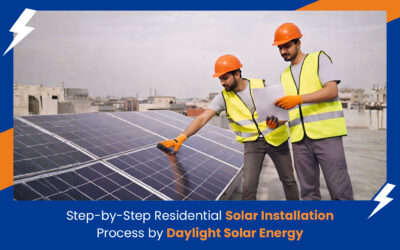
Daylight Solar’s installation technicians have worked across a range of residential roof types in Gujarat. The wiring uses UV-resistant cable rated for outdoor DC applications, with proper connectors fitted to specification. Every connection is tested with a clamp meter and insulation resistance tester before the system is switched on. Earthing and lightning protection are fitted as standard, not as optional extras. This level of execution reflects high quality solar panel installation in practice.
These details separate a system that runs cleanly for 25 years from one that develops faults, potential arc risks, or performance issues within the first five. Poor installation choices, undersized wiring, loose connections, and inadequate earthing are hard to spot at commissioning but show up as real problems later.
Monitoring and inverter technology
The inverters Daylight Solar works with include real-time monitoring that tracks daily generation and flags performance drops. This monitoring is set up for the homeowner at commissioning and is accessible through a phone app. A system that reports generation data daily lets you and the service team catch problems early before they turn into weeks of lost output and lost savings, supporting long term solar energy solutions rather than short-term gains.
For rooftops where shading is an occasional issue, Daylight Solar evaluates whether panel-level optimisers make sense to improve energy output during partial shading conditions. The goal is a system where the inverter is working as hard as the panels to extract the most from every day of available sunlight.
Dealing with Gujarat’s climate conditions
Gujarat’s summers are demanding on solar equipment. Temperatures regularly exceed 40 degrees Celsius, which affects inverter performance and accelerates degradation in components that are not rated for high ambient heat. Monsoon brings moisture, and in coastal areas near Kutch or the western coast, salt air is an added factor. Dust from construction and farming settles on panels and, if left uncleaned, can reduce output by 15 to 30 percent.
Daylight Solar accounts for these conditions during both component selection and installation. Panels with higher protection ratings on junction boxes, inverters designed for high-temperature operation, and cable management that prevents water pooling at connection points are all part of how the team builds systems to last in this specific environment.
Keeping the system performing through regular maintenance
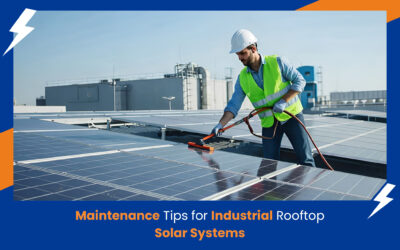
A quality rooftop solar installation from Daylight Solar comes with a maintenance plan to keep the system generating at its rated level. Panel cleaning in Gujarat’s conditions is recommended at a minimum twice a year, and more often in areas near highways, construction sites, or industrial activity. Maintenance visits cover cleaning, inverter health checks, electrical connection inspections, earthing continuity testing, and a structural check of the mounting frame.
Each visit produces a service report that the homeowner can refer back to. If something is found, a panel that is generating less than the others, an inverter error code that has been logging quietly, it gets dealt with during the visit rather than becoming a larger problem later.
Warranties and what to expect at handover
Daylight Solar provides clear documentation on all applicable warranties when handing over the system. Panels carry the manufacturer’s 25-year linear output performance guarantee and a 10 to 12-year product warranty covering defects. Inverters carry a 5-year warranty as standard, with extended options available. Mounting hardware and electrical components are covered under the installation warranty from Daylight Solar.
A solar system’s longevity comes down to three things done consistently: quality equipment chosen for the local conditions, proper installation by a team that knows what they are doing, and routine maintenance that catches issues before they become losses. If you are evaluating solar companies for a home installation, asking for details on their service record after installation is the most direct way to understand what the next 25 years will actually look like for your system, especially when investing in residential rooftop solar panels designed for durability and performance.


0 Comments